Thinking about listing your Miami condo soon? In a high-rise market where buyers scroll fast, you have seconds to make a great first impression. Staging helps your photos pop, your rooms feel bigger, and your listing stand out. In this guide, you will learn what to stage, what it costs, how long it takes, and how to measure the payoff so you can sell with confidence. Let’s dive in.
Why staging works in Miami high-rises
Miami condo buyers include local residents, second-home buyers, and investors. Many shop online first, often from out of town, which makes presentation and photography critical. Staging guides the story of your space, from the view to the balcony, so buyers focus on lifestyle and condition rather than HOA fees or building details.
For condos, staging is especially powerful. Smaller footprints can look tight when empty. Right-sized furniture shows scale and flow, and a styled balcony turns outdoor square footage into an obvious value. Industry experience shows staged listings tend to attract stronger online engagement and more showings, which can shorten days on market and support better offers.
Timing matters too. Buyer activity in Miami often peaks from late fall to early spring. If you can align staging and listing launch with this window, you can benefit from deeper buyer pools. Just remember that building move protocols and holidays can affect scheduling.
What to stage first
Living and dining
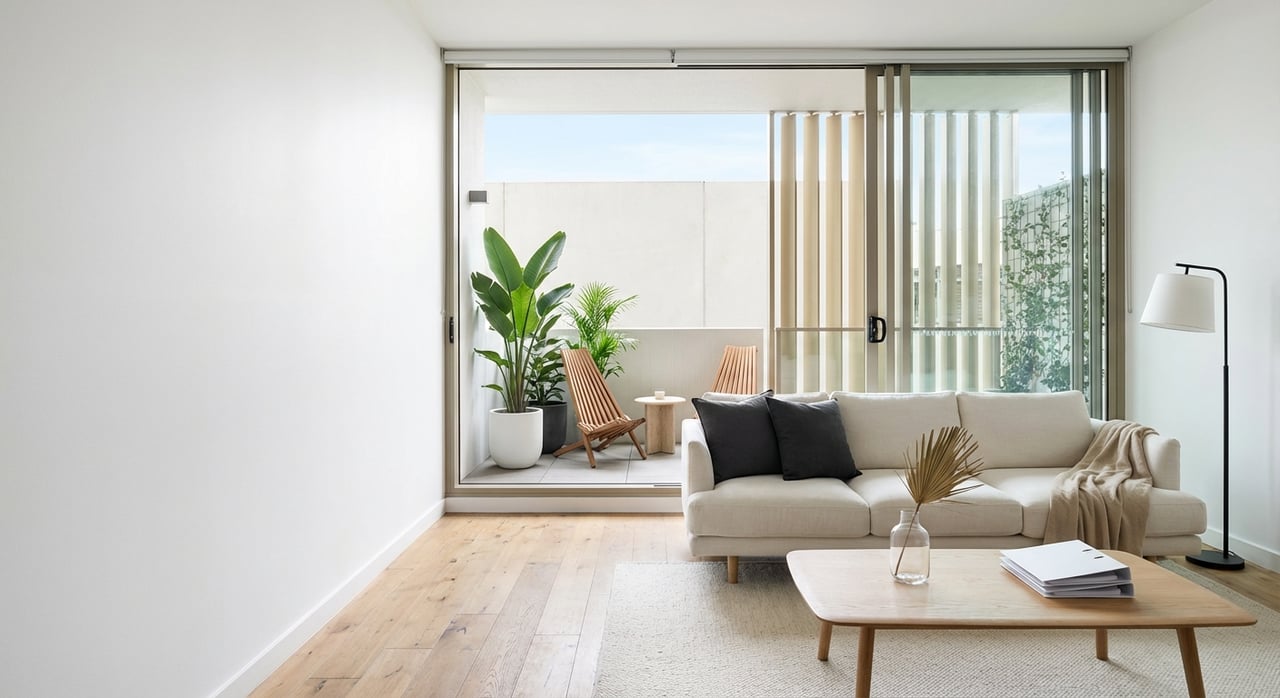
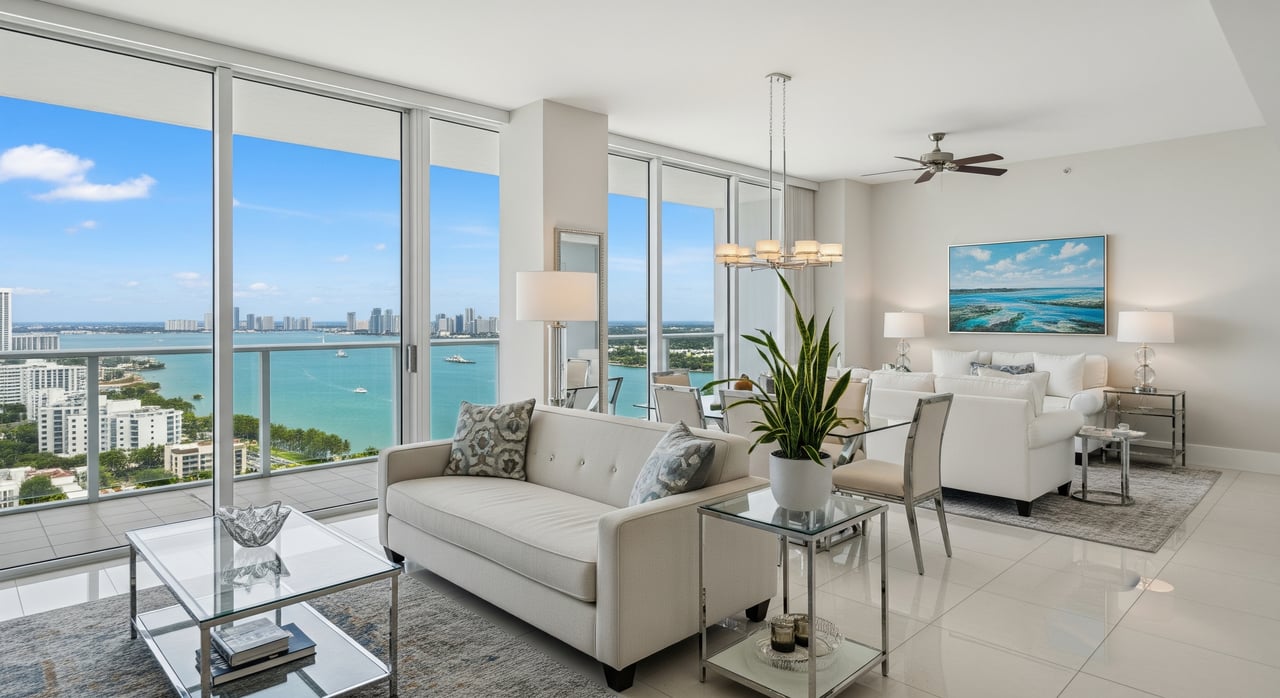
Make your main living area a showpiece. Highlight the view, sightlines to the balcony, and circulation for daily living. Use a clean, neutral base and a few warm accents so photos look inviting and crisp.
Primary bedroom
Show comfortable scale and storage potential. A properly sized bed, two nightstands, and balanced lighting create calm. Keep surfaces clear and styling minimal so the room photographs as spacious.
Balcony or terrace
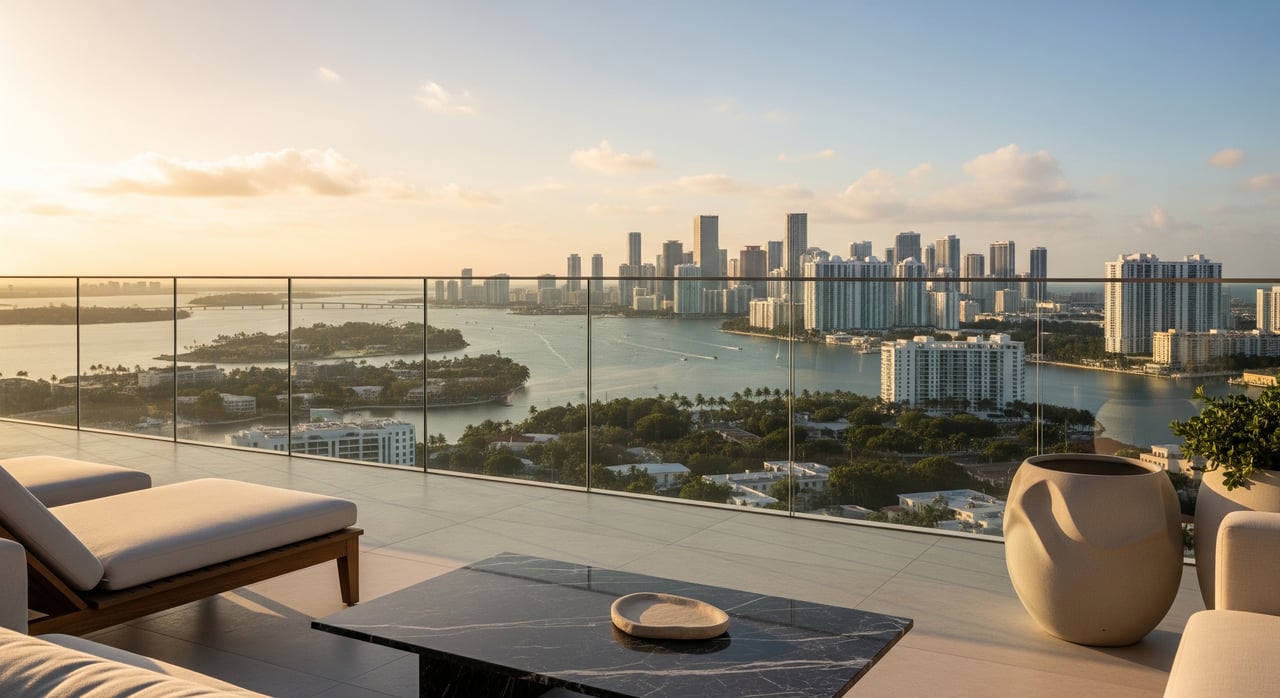
Treat outdoor space like another room. A small bistro set or lounge chairs, an outdoor rug, and a potted palm can showcase real, usable living area. Arrange seating to face the water or skyline if possible.
Kitchen and baths
Declutter counters and replace worn items. Add a simple styled vignette like a bowl of citrus or a cookbook in the kitchen, and fresh white linens in the bath. Clean grout and updated caulk go a long way in photos.
Entry and storage
Open up hallways and entries by removing visual clutter. Use mirrors to bounce light. If you have a primary closet, a light touch with matching hangers and neutral bins helps buyers see storage clearly.
Amenities
Buyers want the full picture. Include clear photos of building amenities like the pool, gym, and deck. If your building allows, capture styled images of furnished common spaces for a cohesive lifestyle story.
Design that sells in Miami
- Emphasize light, views, and indoor to outdoor flow. Avoid heavy curtains that block natural light.
- Stick to a neutral base with refined coastal accents. Think soft whites, sands, and sea-glass tones, not themed decor.
- Choose materials suited for humidity. Favor mold and moisture resistant fabrics and finishes.
- Use right-sized furniture to make rooms read larger. Low-profile, clean-lined pieces work well in condos.
- Keep accessories minimal and purposeful. Large art or a statement mirror beats many small items.
- Layer lighting with floor and table lamps to elevate both photos and evening showings.
Virtual vs physical staging
Virtual staging
Virtual staging is fast and cost effective. It is often delivered within 24 to 72 hours and is ideal for vacant units or tight timelines. You can showcase multiple furniture styles from the same photos.
- Pros: lowest upfront cost, rapid turnaround, flexible looks.
- Cons: does not fix real issues like paint or odors, and furnishings are not present at showings. Most MLS systems require clear disclosure when images are digitally altered.
- Typical costs: about 30 to 200 dollars per image depending on provider and complexity. Virtual decluttering and floor plans are add-ons.
- Best use: vacant condos with modest budgets or when you need to go live quickly.
Physical staging
Physical staging creates an in-person experience that supports premium photography and open houses. It is strong for higher price tiers and luxury high-rises.
- Pros: real impact at showings, better sense of scale, stronger lifestyle appeal.
- Cons: higher upfront cost, logistics for delivery and monthly rental if your listing period runs long.
- Typical Miami ranges:
- Consultation only: 150 to 600 dollars.
- Partial staging: 1,500 to 6,000 dollars for setup, plus 150 to 700 dollars monthly rental.
- Full staging: 3,500 to 15,000 dollars for setup, plus 300 to 3,000 dollars monthly rental.
- Ultra high-end presentations: 8,000 to 25,000 dollars or more for setup, plus 1,000 to 6,000 dollars or more monthly.
- Best use: vacant or high-end units where in-person showings are frequent.
Disclosure and building rules
Many MLS systems require that virtually staged images be labeled clearly. Check local guidance so buyers are not misled. Your building or HOA may require elevator reservations, move permits, insurance certificates from vendors, and may charge move fees. Good stagers and photographers are used to these steps, but confirm rules early to avoid delays.
Timelines and process
Vacant condo timeline
- Days 0 to 3: schedule a staging consult. This can be a virtual walk-through or in-person assessment.
- Days 3 to 7: finalize the staging plan, sign the contract, book delivery and installation.
- Days 7 to 14: complete delivery and installation. Schedule photography for the day of or the day after.
- Days 8 to 16: capture professional photos, a floor plan, and a 3D tour. Go live once media is ready.
Virtual staging can compress this. You can photograph the unit and receive digital staging within 1 to 3 days.
Occupied condo timeline
- Pre-work 1 to 7 days: declutter, complete quick repairs, deep clean, and hold a staging consultation.
- Next 3 to 10 days: remove excess items, then install rental furnishings and decor where needed.
- Schedule photography once staging is complete.
Photo and 3D media
Professional photos should be timed for the best natural light. Twilight images often shine for high-rise listings, capturing the skyline and amenity lighting. A 3D tour for a typical condo usually takes 30 to 90 minutes on site and 24 to 72 hours to process. Floor plans and 3D tours can increase online engagement and help remote buyers feel confident.
Costs and ROI
Build your budget around a few buckets:
- Staging consultation: 150 to 600 dollars.
- Physical staging: see ranges for partial, full, and ultra high-end.
- Virtual staging: 30 to 200 dollars per image.
- Professional photography: 150 to 600 dollars. Twilight or drone can add 150 to 400 dollars.
- 3D tour and floor plan: 200 to 800 dollars.
- Repairs, paint, and cleaning: 300 to 3,500 dollars depending on scope.
- Building move fees or deposits: 0 to 1,500 dollars or more depending on building.
- Storage rental if needed: 100 to 500 dollars or more per month.
What to expect from staging:
- Staging often reduces days on market and increases buyer engagement. Exact dollar uplift varies by building, price tier, and condition.
- Condos often see strong relative benefit since staging clarifies layout and scale.
- Your return comes from improved visuals that drive more views and showings, which can create better offer momentum, and from lower carrying costs when you sell faster.
How to measure success:
- Track listing views and clicks before and after staging.
- Monitor showings per week.
- Compare days on market with nearby comps and any prior listing history.
- Count offers, note terms and strength.
- Evaluate sale price as a share of list and relative to similar closed sales.
Program goals to aim for, depending on market conditions:
- Double or better online views after professional media and staging.
- A meaningful reduction in days on market compared with similar unstaged listings.
- A higher share of list price and potential for multiple offers in peak season.
Building logistics checklist
Confirm these items with building management early to avoid last-minute surprises:
- Freight elevator reservation and allowable move windows.
- Certificate of Insurance from staging and media vendors.
- Any move-in or move-out fees or deposits.
- Loading dock access and delivery route.
- Access details: keys, fobs, or front desk authorization.
- Rules on signage, staging common areas, and open house protocols.
Quick styling checklist for Miami high-rises
- Fix small cosmetic issues like peeling caulk and loose hardware.
- Neutralize odors and service the AC. Clean windows and remove any salt streaking.
- Brighten dark walls with warm neutral paint.
- Stage the balcony as real living space with outdoor seating and a rug.
- Use mildew resistant fabrics and low-maintenance plants.
- Keep sightlines to water and sky clear. Use mirrors to amplify light and views.
- Keep accessories sparse and purposeful. Your photos should sell the lifestyle, not the decor.
When to list for maximum interest
If you can choose your timing, the Miami high season typically runs from late fall through early spring. Staging just before this window and going live with fresh professional media helps you catch peak buyer attention. In the Miami–Miami Beach–Kendall area, this matters because many buyers are seasonal or remote and plan trips during these months.
Ready to maximize your sale?
You do not have to guess. A clear plan that combines right-sized staging with editorial-quality photography, a 3D tour, and data-informed pricing can protect your time and net proceeds. If you are planning a sale in Miami-Dade, we can help you tailor the approach to your building, price tier, and timeline.
Request a consult with Hector A Valdes to get a refined, property-specific staging and launch plan.
FAQs
Should I stage a vacant Miami condo or sell it empty?
- Vacant condos often photograph smaller and feel less inviting. Use virtual staging for speed and budget, or physical staging for stronger in-person impact.
Is virtual staging allowed in Miami-Dade listings?
- Yes, if you disclose that images are digitally altered as required by MLS guidance. Virtual staging is best for photos and tight timelines.
How long should I keep staging in place?
- Keep staging through the first 2 to 6 weeks when interest peaks. Extend monthly rentals for luxury listings or until you secure the right offer.
Will staging pay for itself in Miami high-rises?
- Many sellers see faster sales and stronger offers, plus lower carrying costs. Track views, showings, days on market, and offers to gauge your return.
What if my building has strict move rules?
- Plan early. Reserve the freight elevator, confirm vendor insurance, and budget for any fees or deposits so installation and photography stay on schedule.